
Overview
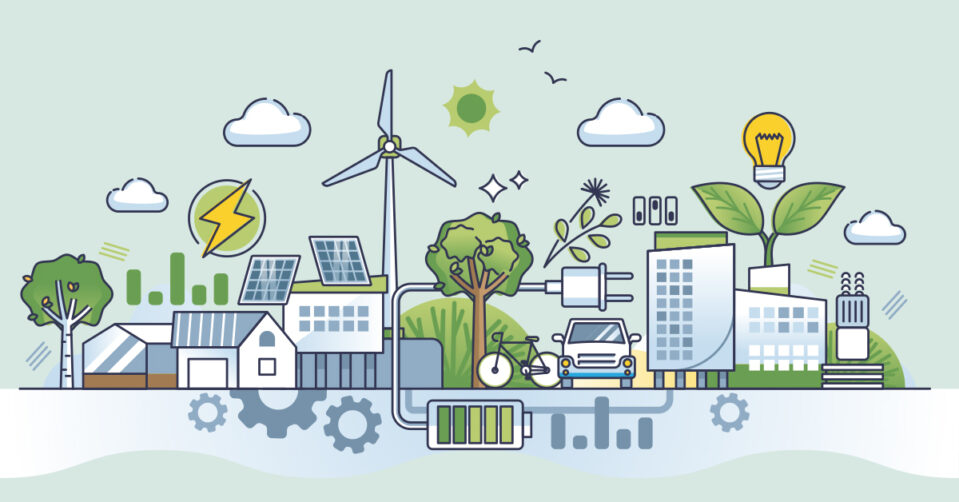
Energy Transition is the process of shifting away from higher carbon intensive sources (ie. fossil-fuel based sources, such as oil) to lower carbon emission sources of energy (eg. low-carbon biodiesel) or renewable sources of energy (eg. solar-powered energy).
It is the process of changing the way energy is produced, delivered, and consumed, to meet changing economic, environmental, and technological goals.
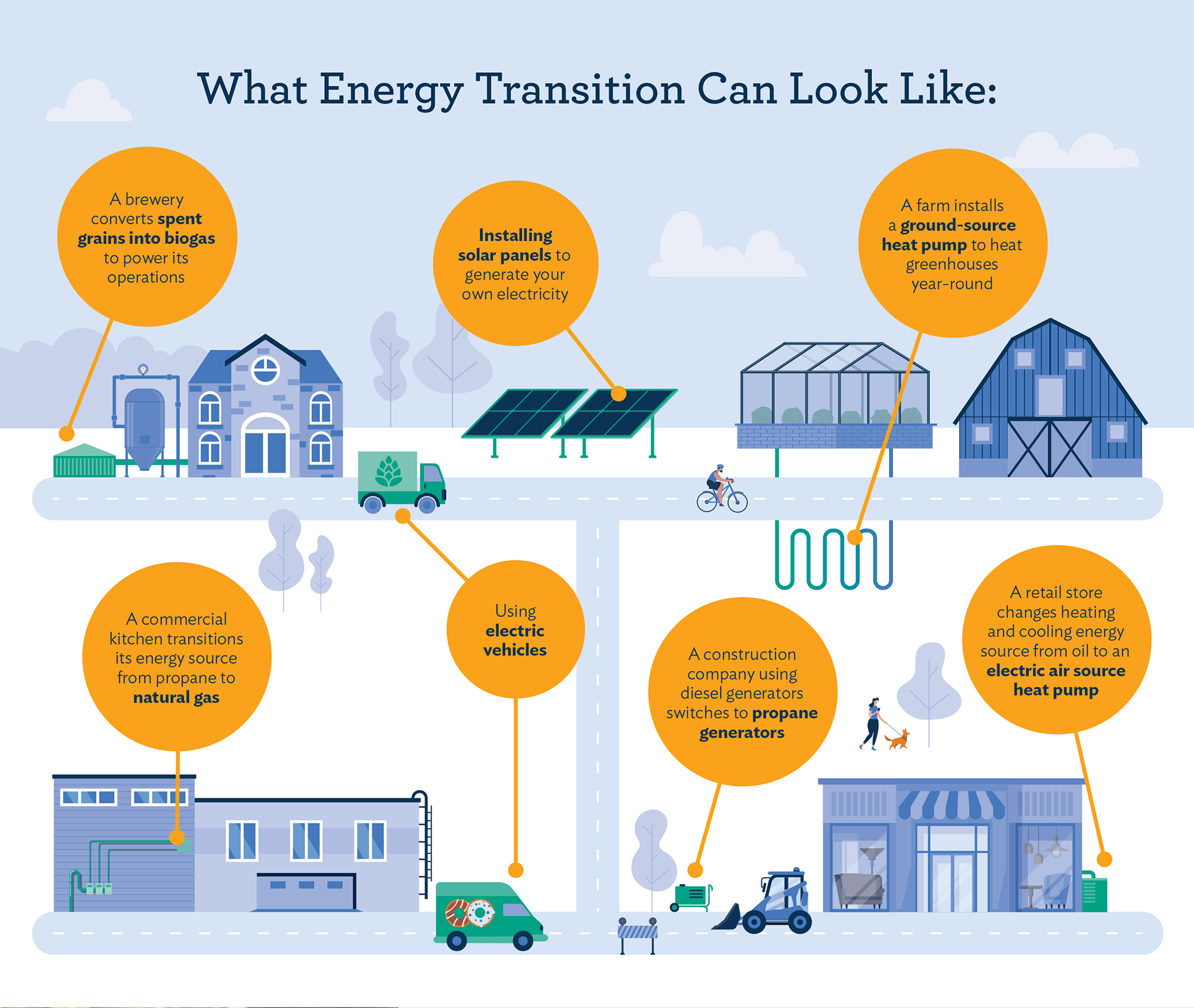
The shifting from one energy system or fuel type to another can include:
Definitions & Terms
Commonly used definitions and terms when discussing energy transition.
- Carbon Capture, Transport, Utilization, or Storage: Refers to the process of capturing and moving CO₂ so that it can either be reused or stored in a way that prevents it from being released into the atmosphere.
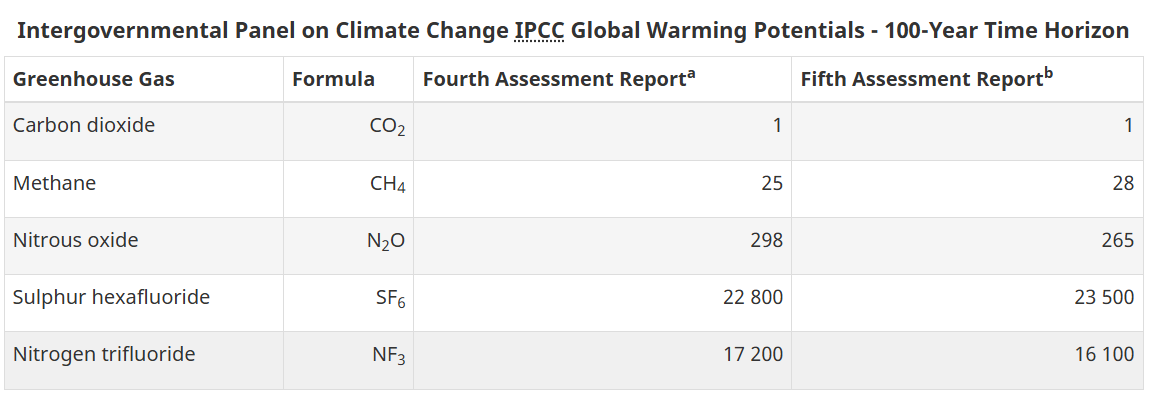
- Carbon Dioxide Equivalent (CO₂e): A way to compare different greenhouse gases by showing their impact as the amount of carbon dioxide that would cause the same warming effect.
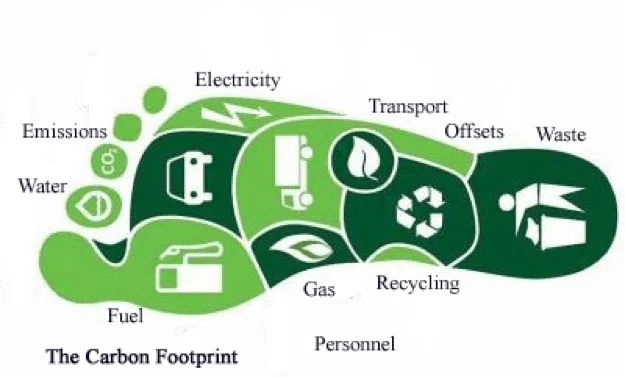
- Carbon Footprint: The total amount of greenhouse gases, such as carbon dioxide, released into the atmosphere by a person, group, product, or activity. It is usually measured in tons of carbon dioxide equivalent (CO₂e).
- Decarbonization: The process of lowering carbon dioxide emissions from producing and using energy.
- Example: Methane is 84 times more potent than carbon dioxide over 20 years. If a car emits 1 ton of methane, its effect is like releasing 84 tons of carbon dioxide. So, the car’s emissions would be 84 tons of CO₂ equivalent (CO₂e).
- Electrification: Switching from using fuels like gas or oil to using electricity for things such as heating, vehicles, or machines.
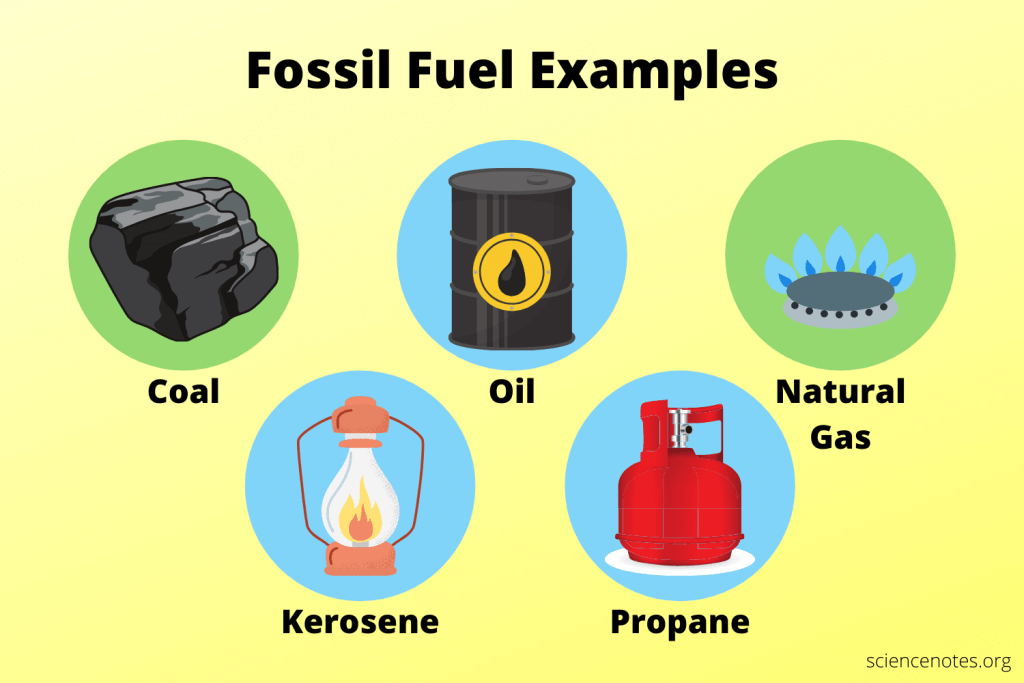
- Fossil Fuels: Energy sources such as coal, oil, and natural gas that come from the remains of ancient plants and animals formed over millions of years and are burned for energy.
- Global Warming Potential (GWP): A way to measure how much heat a greenhouse gas traps in the atmosphere over a certain time compared to carbon dioxide (CO₂), which has a GWP of 1.
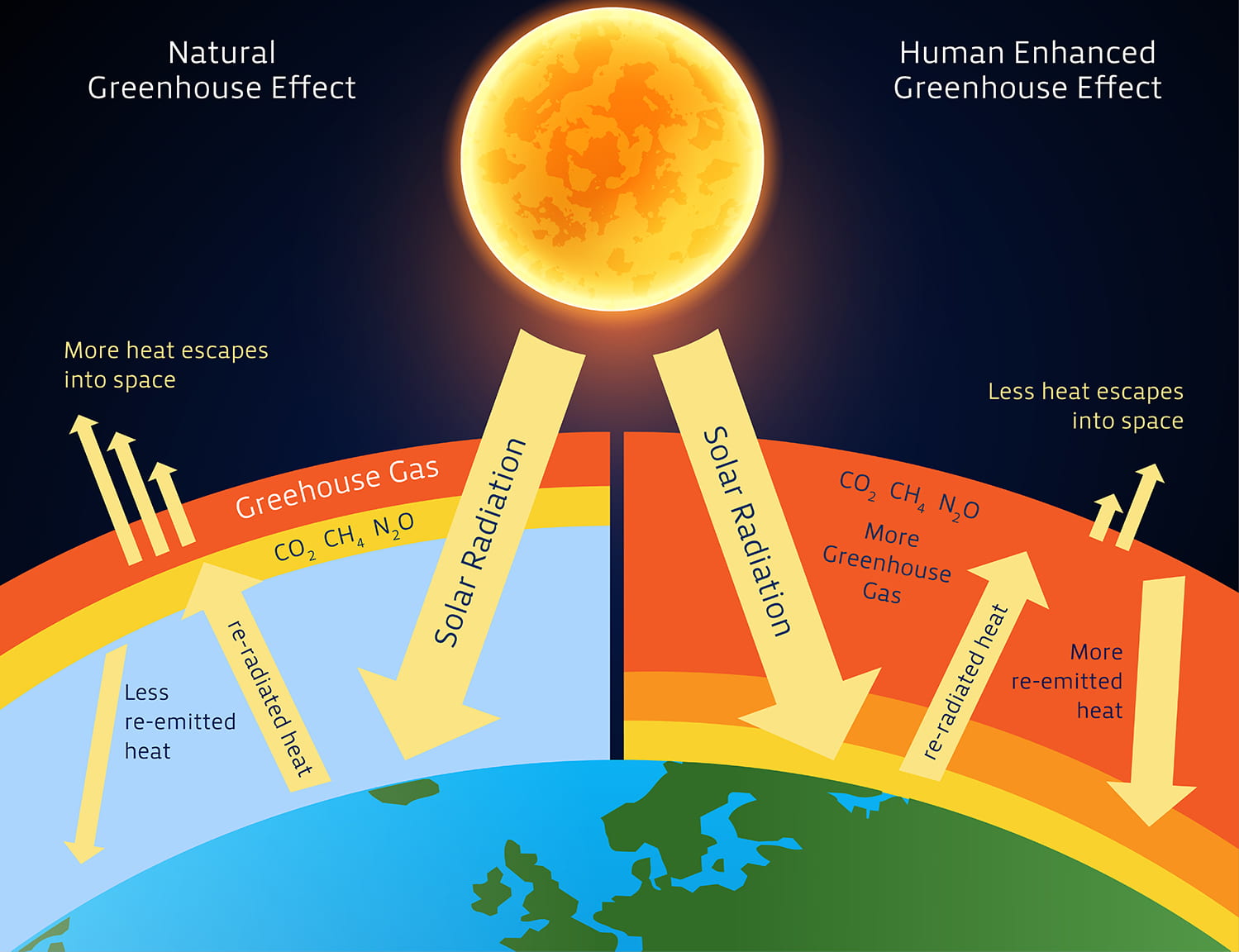
- Greenhouse Gases (GHGs): Gases in the air, like carbon dioxide (CO₂), methane (CH₄), and nitrous oxide (N₂O), that trap heat from the sun and warm the Earth like a blanket.
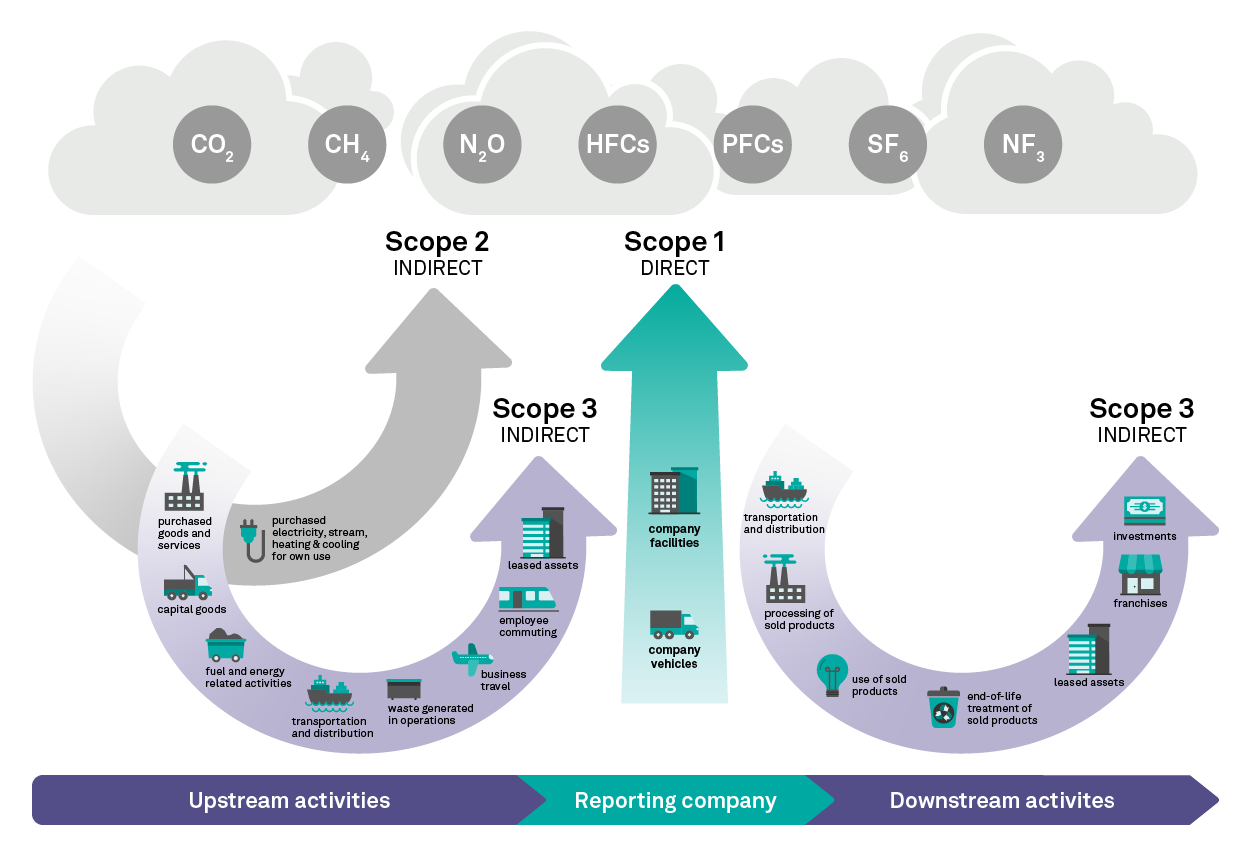
- Greenhouse Gas Emissions: Greenhouse gas emissions are grouped into three scopes. Scope 1 covers direct emissions from things a company controls, like fuel for vehicles or heating. Scope 2 includes indirect emissions from purchased energy, such as electricity. Scope 3 covers all other indirect emissions, like supply chains, travel, and product use.
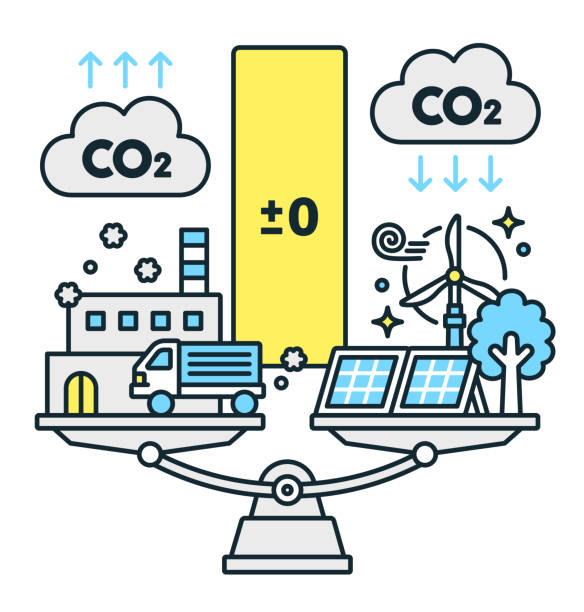
- Net-Zero: Balancing the amount of greenhouse gases released into the atmosphere with the amount removed so that the total is zero.
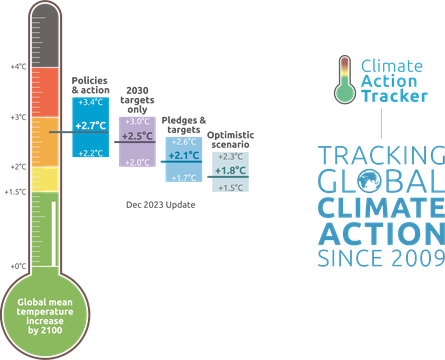
- Paris Agreement: Adopted in 2015, this global treaty brings together 196 countries to limit global warming to below 2°C, aiming for 1.5°C, to prevent the worst effects of climate change. Countries set their own emission reduction goals and update them every five years.
- Renewable Energy: Energy made from natural sources that are always being replaced, like sunlight, wind, water, and the Earth’s heat.
- Sustainability: Using resources and living in a way that meets current needs without harming the ability of future generations to meet their own needs.
Energy Efficiency Vs. Energy Transition
Energy Efficiency means using less energy to do the same job, for example, switching LED lights, improving heating and cooling systems, or using smart controls. This saves energy and money but doesn’t change where the energy comes from.
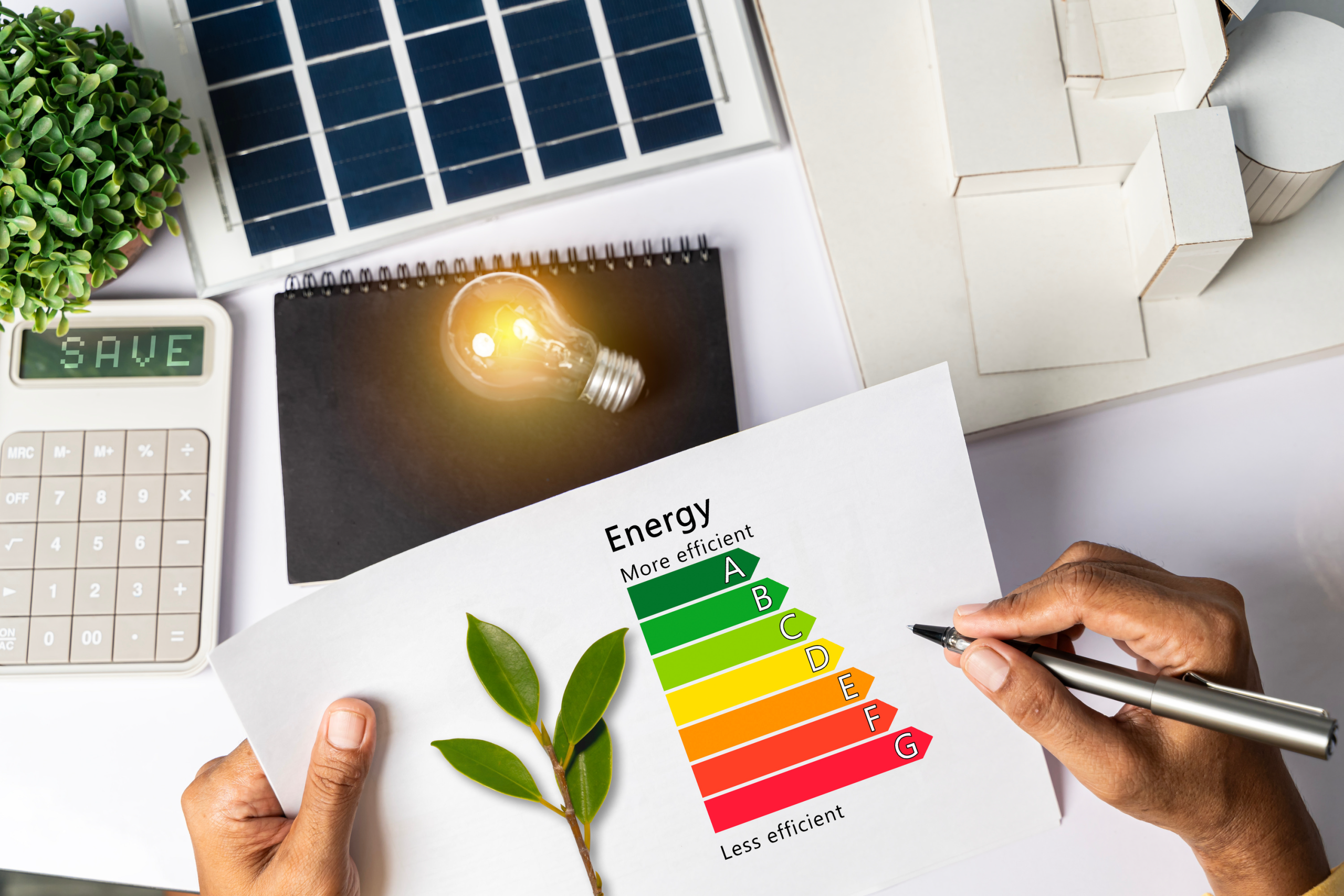
Energy Transition means switching from fossil fuels to cleaner or renewable energy sources such as solar, wind, biofuels, electrification, or hydrogen. This means a business or home gets its energy from cleaner options.

How They Connect: Energy transition means moving to cleaner, lower-carbon energy sources. Managing how much energy is used is important in this process. By using less energy, businesses can lower the cost and size of the change and make it more successful and lasting. While energy efficiency is helpful, switching to cleaner energy sources brings bigger benefits and long-term improvements.
Greenhouse Gas Reduction Targets
Canada Greenhouse Gas Emission Targets:
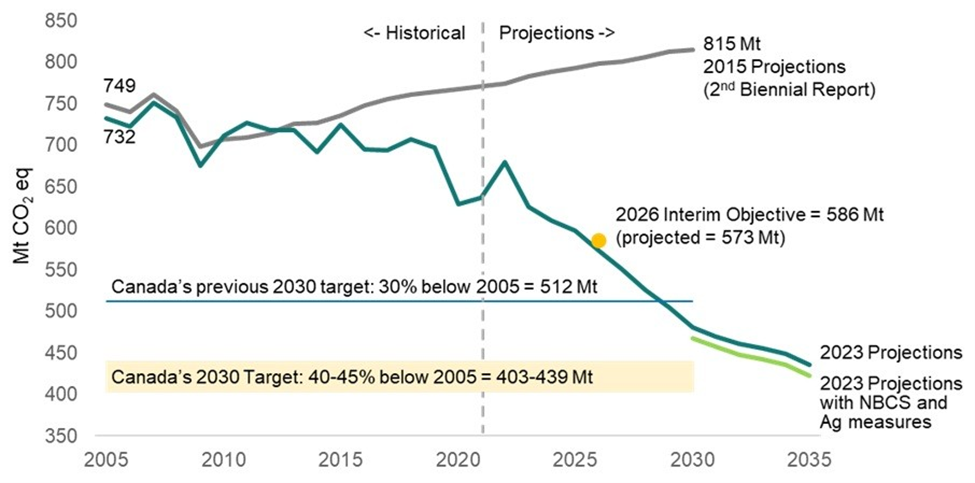
- 1,2Canada has set ambitious targets to combat climate change and transition to a low-carbon economy. Through the Canadian Net-Zero Emissions Accountability Act it legally binds the federal government to achieve net-zero greenhouse gas emissions by 2050. The two most important targets are:
- 2030 Target: Reduce greenhouse gas emissions by 40-45% below 2005 levels.
- 2050 Target: Achieve net-zero emissions.
3In addition to general greenhouse gas emission targets, the Government of Canada has implemented a methane specific regulation, which requires a reduction of oil and gas methane emissions by 75% below 2012 levels by 2030.
- 4Canada’s new Electric Vehicle Affordability Program (EVAP) encourages Canadians to adopt clean energy, by offering incentives to buy or lease electric vehicles (EVs). Incentives consist of:
- Fuel cell electric and battery-electric vehicles: up to $5,000
- Plug-in hybrid vehicles: up to $2,500
- This incentive can be used on the following light-duty vehicles:
- Foreign EVs with a value of $50,000 or less
- EVs made in Canada (the incentive can be used on an EV of any value; there is no price cap)
- Between February 16, 2026, and March 31, 2031 the incentive amount will gradually decrease for all eligible vehicle types.
- Types of zero-emission vehicles (ZEVs):
- Battery Electric Vehicles (BEVs): Powered solely by electricity stored in batteries.
- Plug-in Hybrid Electric Vehicles (PHEVs): Can run exclusively on electricity for a specified distance before switching to a hybrid mode using both liquid fuels and electricity
Provincial Greenhouse Gas Targets:
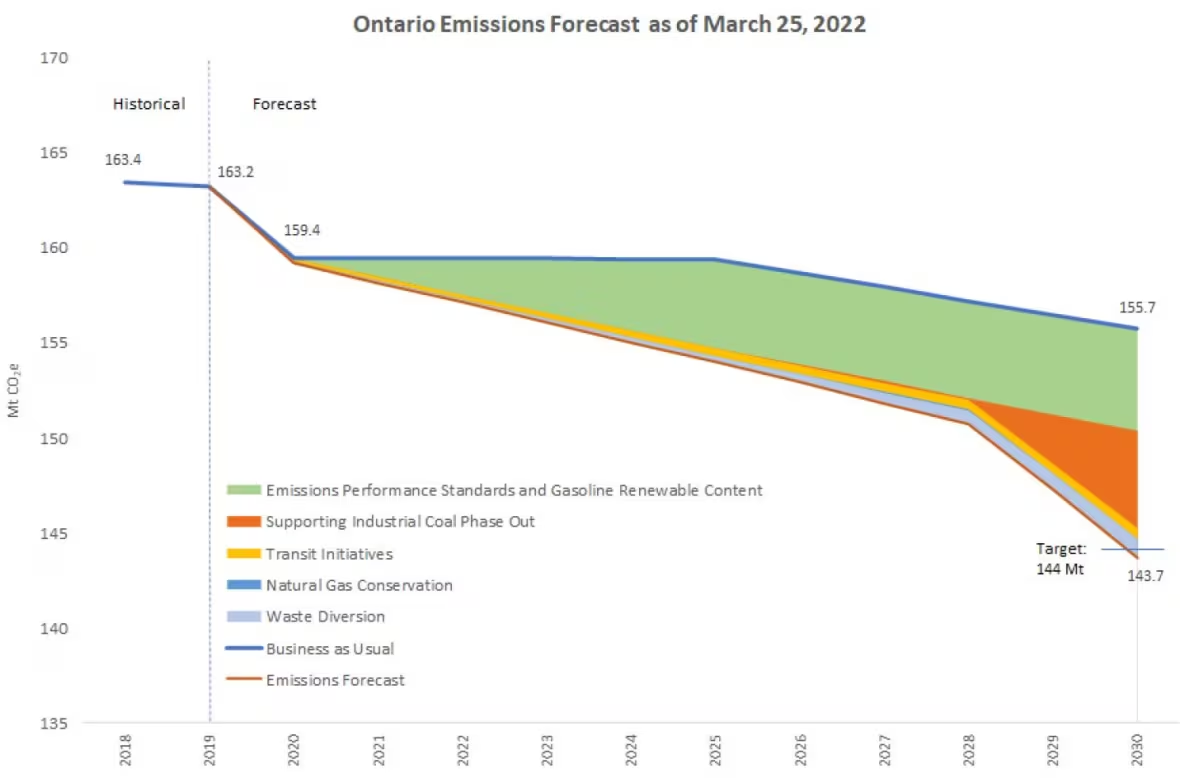
- 52030 Target: Ontario aims to reduce GHG emissions by 30% below 2005 levels by 2030. This goal aligns with Canada’s national targets and represents a significant step towards mitigating climate change.
- 62050 Target: By 2050, Ontario seeks to achieve an 80% reduction below 1990 levels. This long-term target underscores the province’s dedication to deep decarbonization and sustainable development.
- 7Ontario is committed to achieving a net-zero electricity grid by 2050.
Federal & Provincial Environmental Regulations
The Federal Government and Provincial Government have regulations and laws that may apply to your business and may require you to report your emissions or follow their guidelines.
Canada:
1. The Greenhouse Gas Pollution Pricing Act is Canada’s federal law that sets a national carbon pricing system, applying a fuel charge on fossil fuels and an Output-Based Pricing System (OBPS) for large industrial emitters. It ensures all provinces and territories have a minimum standard for pricing carbon pollution to help reduce greenhouse gas emissions.
- Output-Based Pricing System (OBPS)
- Applies to large industrial facilities emitting ≥50,000 tonnes CO₂e/year. Facilities emitting 10,000–50,000 tonnes CO₂e/year in eligible sectors may opt in.
- Facilities receive a Total Annual Emissions Limit (TAEL) based on production and sector-specific benchmarks.
- Emissions below benchmark earn Output-Based Credits (OBCs).
- Emissions above benchmark require compliance through:
- Surrendering OBCs or federal offset credits, or
- Paying a price for each excess tonne.
- OBPS facilities are exempt from the federal fuel charge for fuels used on-site.
- Facilities must report Scope 1 direct emissions of the following 7 greenhouse gases (above ≤0.5% total GHG emissions):
- Carbon dioxide (CO₂), Methane (CH₄), Nitrous oxide (N₂O), Sulphur hexafluoride (SF₆), Nitrogen trifluoride (NF₃), Hydrofluorocarbons (HFCs), Perfluorocarbons (PFCs).
The reporting deadline is June 1st each year, through Environment and Climate Change Canada’s reporting portal (Single Window System – SWIM) with the data covering the previous calendar year (January 1 to December 31).
2. The Greenhouse Gas Reporting Program (GHGRP) requires reporting from facilities that emit ≥ 10,000 tonnes CO₂‑equivalent per year of greenhouse gases (Scope 1).
- Facilities involved in carbon capture, transport, utilization, or storage (CCTUS) must also report, regardless of emissions.
- Additionally, facilities engaged in the following activities are required to provide additional data:
– aluminum production, ammonia production, base metal production, cement production, electricity or heat-steam generation, ethanol production, hydrogen production (refineries or stand-alone), iron and steel production, lime production, mining, nitric acid production, petroleum refining, pulp and paper production, CO2 capture, transport, injection and/or geological storage
The reporting deadline is June 1st each year, through Environment and Climate Change Canada’s reporting portal (Single Window System – SWIM) with the data covering the previous calendar year (January 1 to December 31).
3. The Clean Fuel Regulations (CFR) require producers and importers of gasoline and diesel in Canada to reduce the carbon intensity of their transportation fuels annually from 2023 to 2030.
- Suppliers of renewable fuels such as ethanol, biodiesel, renewable diesel, sustainable aviation fuel, hydrogen, and renewable natural gas are also regulated.
- Compliance can be met by blending low-carbon fuels, adopting cleaner production technologies, or purchasing credits through a trading system.
- Feedstock suppliers must provide traceability and comply with land-use and sustainability criteria.
- Operators of electric vehicle charging stations and alternative fuel infrastructure can generate credits by supporting fuel switching.
- Regulated parties must report fuel volumes, carbon intensity data, and credit transactions annually to demonstrate compliance.
- Reduction targets increase progressively each year until 2030.
The reporting deadline is July 31st each year, through the Credit and Tracking System (CATS) with the data covering the previous calendar year (January 1 to December 31).
Ontario:
1. Ontario Regulation 506/18: Reporting of Energy Consumption and Water Use, requires owners of large buildings (50,000 square feet or more) or multi-unit residential buildings with 10 or more units, to report their energy and water use annually to the Ministry of Energy.
- The annual reporting deadline is July 1st each year, with the data covering the previous calendar year (January 1 to December 31).
- Reports must be submitted through the Energy Star Portfolio Manager tool, a free online platform developed by the U.S. Environmental Protection Agency and adapted for use in Canada. Building owners need to create an account, enter their building’s information, and upload monthly energy and water usage data. This includes electricity, natural gas, and water consumption.
- For buildings with a gross floor area of 100,000 square feet or more, the reported data must be verified by a certified professional, such as a professional engineer or a certified energy manager, at least once every five years.
2. Ontario Regulation 390/18: Greenhouse Gas Emissions: Quantification, Reporting and Verification, requires large industrial facilities (that emit more than 10,000 tonnes or more of CO₂ equivalent (CO₂e) per year) and electricity importers (into Ontario) to report their annual greenhouse gas emissions to the Ministry of the Environment, Conservation and Parks. Any facility that is registered, or required to register, under Ontario’s Emissions Performance Standards (EPS) must also submit a report and have their report verified.
- Report Scope 1 (direct emissions) of 7 main GHGs: CO₂, CH₄, N₂O, SF₆, NF₃, HFCs, and PFCs.
- Not required to report GHG emissions of fuels that do not exceed 0.5 percent of the total facility GHG emissions from all fuels combusted.
3. Ontario Regulation 77/19: Greenhouse Gas Emissions: Quantification, Reporting and Verification, filed in 2019, refines the methods and definitions used for calculating and reporting greenhouse gas (GHG) emissions under O. Reg. 390/18. It standardizes scientific terms and calculation formats to ensure more accurate and uniform reporting.
- Applies to the same facilities and electricity importers covered by O. Reg. 390/18 (e.g., operations emitting ≥ 10,000 t CO₂e/year or importing power). It does not create a new threshold, just improves reporting rules.
- Updated formulas: Emissions must be calculated using a set equation where GWP (Global Warming Potential) values switch to the most recent tables depending on the year.
- O. Reg. 77/19 doesn’t add new obligations, but makes sure everyone calculates and defines emissions the same way, using up-to-date methods and clear language.
4. Ontario Regulation 241/19: Greenhouse Gas Emissions Performance Standards, began in 2022, under Ontario’s Emissions Performance Standards Program, requires large industrial facilities (that emit more than 50,000 tonnes of CO₂e or more per year), and other facilities whose primary activities are listed in Schedule 2 of the regulation (e.g. smelting, petroleum refining, natural gas processing, producing grain ethanol) to complete reporting by July 1st of each year through the EPS Online system. The responsibility relies on the company to know whether they meet the criteria required for this reporting.
- Facilities emitting 10,000–50,000 t CO₂e per year in eligible industrial sectors (Schedule 2) can choose to join, often to gain exemptions from federal fuel charges.
- Calculate Emissions using the same approved methods from O. Reg. 390/18 (Scope 1, seven GHGs).
- Determine Emissions Limit (Total Annual Emissions Limit (TAEL) based on benchmarks—either sector-average or facility-specific. TAEL is based on production output and emissions intensity benchmarks.
- If emissions are higher, the facility must surrender compliance units:
- Excess Emission Units (EEUs) from the government at a fixed price.
- Emission Performance Units (EPUs) from under-emitters, which are tradable.
- If emissions are lower, the facility earns EPUs to bank or sell.
5. Ontario Regulation 25/23: Broader Public Sector: Energy Reporting and Conservation and Demand Management Plans, under the Electricity Act, applies to Ontario’s broader public sector—like municipalities, schools, universities, colleges, hospitals, long-term care facilities, and similar agencies.
- Annual reporting of energy use and greenhouse gas emissions to the Ministry of Energy.
- A five‑year Energy Conservation and Demand Management (ECDM) plan outlining past performance and future goals.
- Includes electricity, natural gas, water usage, and GHG emissions.
6. Energy for Generations (Ontario’s Integrated Energy Plan): Ontario’s long-term plan to ensure businesses and communities have access to affordable, secure, and reliable energy as demand grows. The plan coordinates electricity, natural gas, and emerging energy sources to support economic growth, strengthen infrastructure, and provide a stable energy system through 2050.
- Under the LT2 procurements – where companies bid to build new power projects – an Agricultural Impact Assessment (AIA) must be completed when proposing energy projects on prime agricultural land. These assessments evaluate the impact said project would have on the land’s capability to sustain agricultural activities, thus attempting to balance the province’s need for energy improvement, with the need to protect its agricultural assets.
Bruce County & Municipalities Context
In Bruce County, different communities may have their own climate goals, rules, or bylaws that could impact your project plans and timelines. Checking with them will ensure your energy initiatives remain on track and align with your business objectives.
- 8Bruce County Official Plan (2026-2046)
- Bruce County maintains a clear focus on clean energy technologies that reduce greenhouse gas emissions, and promote low-carbon generation, specifically from manufacturing supply chains in the region.
- The county is open to reinvestment; new investment and secondary industries entering the energy sector, as they will significantly shape economic growth in the coming years.
- Bruce County will continue to work alongside local municipalities to determine the need, feasibility and implications of alternative electricity generation, including but not limited to solar, wind, battery energy storge and bio-energy where possible.
- 9Environmental Sustainability Action Plan (2026-2030)
- Bruce County is actively developing an Environmental Sustainability Action Plan aimed at building organizational capacity to adapt to and mitigate the impacts of climate change. This plan will help shape a more sustainable future for Bruce County’s operations, services, and communities.
- Waste Management: Improve waste reduction and management practices.
- Climate Resilience and Adaptation: Enhance the ability to respond to climate impacts.
- Energy Conservation: Promote energy efficiency and reduce consumption.
- Forest Conservation: Protect and manage forest resources.
- Sustainable Transportation: Encourage environmentally friendly transportation options.
- Bruce County is actively developing an Environmental Sustainability Action Plan aimed at building organizational capacity to adapt to and mitigate the impacts of climate change. This plan will help shape a more sustainable future for Bruce County’s operations, services, and communities.
- 10Bruce County Economic Development Strategic Plan (2022-2026)
- Bruce County’s 2022–2026 Economic Development Strategic Plan positions the region as a clean energy innovation hub, supporting economic growth through collaboration, business development, and sector advancement—particularly by leveraging its energy sector to drive innovation, investment, and long-term prosperity.
- The County plays a key role in enabling the clean energy transition by supporting nuclear-led growth, advancing hydrogen and low-carbon technologies, and fostering diversification of the energy sector through cluster development, cross-sector partnerships, and new business opportunities tied to clean energy innovation.
- 11Corporate Strategic Plan (2022) & 12Economic Development Strategic Plan (2026)
- Arran-Elderslie supports clean energy opportunities by leveraging Bruce Power activity and participating in the Bruce Power Economic Development and Innovation Initiative.
- The municipality is focused on attracting and retaining investment, supporting business growth and entrepreneurship, expanding the local workforce, and building partnerships that help local businesses benefit from opportunities associated with Bruce Power and its supply chain.
- 13Community Improvement Plan (2026)
- The Arran-Elderslie Community Improvement Plan (CIP) supports energy-efficient retrofits, alternative energy systems, and sustainable building improvements, including insulation, heating systems, lighting upgrades, solar, wind, green roofs, and LEED-related projects.
- The CIP also aims to encourage building retrofits and support a sustainable and innovative business community.
- Eligible projects may receive funding of up to 50% of eligible project costs, subject to program requirements and annual budget approval.
- 14Strategic Action Plan (2021-2025)
- Brockton recognizes the importance of long-term planning to support community growth and future infrastructure needs.
- The municipality has identified opportunities related to methane capture and energy recovery from organic waste and supports investments that strengthen infrastructure and community sustainability.
- 15Community Improvement Plan (2026)
- The Brockton Community Improvement Plan (CIP) supports investments in energy efficiency, renewable energy, and sustainable building projects, including LEED-certified construction, building retrofits, rooftop solar, green roofs, and other measures that reduce energy use, lower operating costs, and improve environmental performance.
- Funding availability is determined annually through the municipal budget process.
- 16Huron-Kinloss Climate Change & Energy Plan (2020)
- The Township of Huron-Kinloss Climate Change and Energy Plan supports businesses in reducing energy costs, improving energy efficiency, and lowering greenhouse gas emissions through building improvements, energy management initiatives, and investments in low-carbon and renewable energy solutions.
- The plan also encourages business owners to explore available funding, incentives, and programs that support energy-saving projects and long-term operational resilience.
- 17Economic Development Action Plan (2020)
- Energy-related opportunities are centered on Bruce Power, nuclear industry suppliers, workforce growth, and partnerships that strengthen the region’s position within Ontario’s energy economy.
- 18Community Improvement Plan (2024)
- Huron-Kinloss is committed to energy efficiency and conservation and has established a financial incentive grant program to aid downtown commercial property owners with energy efficiency and resource conservation.
- Eligible projects may include new green buildings that meet LEED (Leadership in Energy and Environmental Design) certification standards, energy-efficiency retrofits, and alternative energy generating sources such as rooftop solar panels. The Township also supports innovative and value-added processes through its Agri-Food Innovation Grant.
- 19Kincardine Official Plan (2021)
- The Municipality of Kincardine Official Plan supports growth through the continued development of nuclear energy and alternative clean energy technologies, including wind and solar, while recognizing the importance of climate change planning and mitigation.
- The Municipality encourages energy projects that improve energy efficiency, air quality, and greenhouse gas emissions through appropriate land-use planning, design, and orientation, while supporting economic development opportunities associated with reliable energy sources and reinforcing its role as a Centre of Excellence for nuclear and alternative energy industries.
- 20Kincardine Economic Development Strategy (2020-2025)
- The Municipality of Kincardine Economic Development Strategy recognizes the nuclear sector as a key economic driver and identifies opportunities for businesses to benefit from investments, innovation, and supply chain growth associated with the energy sector.
- The Strategy supports business retention and expansion, encourages partnerships between energy-sector businesses and local companies, and promotes opportunities in emerging areas such as alternative energy and hydrogen. It also highlights the potential for innovation, entrepreneurship, and technology development to create long-term economic growth beyond the nuclear sector.
- 21Community Improvement Plan (2024)
- The Municipality of Kincardine Community Improvement Plan (CIP) supports businesses investing in energy-efficient building improvements, LEED-certified construction, and alternative energy technologies.
- The program encourages projects that improve building performance, reduce energy consumption, and support long-term sustainability through building retrofits, energy-efficient upgrades, and the installation of alternative energy generating sources such as solar and wind energy systems.
- Funding availability and eligible programs are determined annually through municipal and County budget processes.
- 22Municipality of Northern Bruce Peninsula Strategic Plan (2021-2025)
- Northern Bruce Peninsula’s Strategic Plan demonstrates support for environmental sustainability and climate action through its Sustainable Environment and Infrastructure priority.
- The municipality is committed to protecting environmental assets and supporting the recommendations of its Climate Action Committee.
- 23Northern Bruce Peninsula Climate Action Plan (2022-2030)
- Northern Bruce Peninsula aims to reduce energy-related emissions by improving energy efficiency and transitioning homes, businesses, and transportation away from fossil fuels.
- The Municipality is encouraging the use of heat pumps, electric vehicles, and other low-carbon energy solutions to build a more sustainable community.
- 24Community Improvement Plan (2023)
- Northern Bruce Peninsula’s Community Improvement Plan encourages energy efficiency and environmental improvements through incentives for eligible redevelopment and building improvement projects. Eligible projects may include energy-efficient building retrofits, LEED-standard development, and the installation of alternative energy generating sources such as solar or wind devices and green roofs.
- 25Saugeen Shores Official Plan (2012)
- Saugeen Shores promotes energy conservation through innovative building design, efficient community planning, and energy efficiency improvements to existing buildings. The Town also supports roof-mounted solar energy systems on residential and commercial buildings.
- 26Saugeen Shores Strategic Plan (2023-2027)
- Saugeen Shores supports energy management initiatives, waste diversion efforts, and measures to mitigate and adapt to climate change, while preserving and expanding green spaces, trails, parks, and tree canopy.
- The Town also supports the advancement of the region as a clean energy and innovation centre and recognizes clean energy as an opportunity for economic growth.
- 27Community Improvement Plan Policy (2024)
- Saugeen Shores supports energy efficiency and sustainability through financial incentive programs that encourage building retrofits, energy-efficient upgrades, green building design, and renewable energy installations.
- Eligible projects may include improvements such as insulation, energy-efficient windows and doors, lighting and HVAC upgrades, LEED-certified development, and solar or wind energy systems.
- Financial incentives may be available through the Town’s Community Improvement Plan, subject to Council approval and available funding.
- 28Official Plan (2023)
- South Bruce’s Official Plan supports energy-efficient and environmentally sustainable development through Community Improvement policies that encourage redevelopment, infrastructure improvements, and enhanced environmental standards while promoting energy efficiency across residential, commercial, industrial, institutional, and recreational uses.
- 29Community Improvement Plan (2023)
- South Bruce’s Community Improvement Plan provides financial incentives for eligible development, redevelopment, building improvement, and energy-efficiency projects, including retrofits to improve building energy performance and the installation of alternative energy generating sources such as solar and wind systems.
- Funding is not guaranteed and is subject to annual municipal and county budget decisions, program availability, and project approval.
- 30South Bruce Peninsula Corporate Strategic Plan (2020-2025)
- South Bruce Peninsula supports sustainable infrastructure and economic growth through its commitment to maintaining sustainable and reliable infrastructure, retaining businesses, and creating capacity for future employment opportunities. Strategic actions include expanding access to municipal services and planning for future infrastructure needs.
- 31Community Improvement Plan (2024)
- The Town of South Bruce Peninsula’s Community Improvement Plan adopts a program of financial incentives that encourage development, redevelopment, and improvement of private lands.
- The Plan supports clean energy through incentives for the retrofit of existing buildings for energy efficiency, the construction of new buildings and infrastructure that meet Leadership in Energy and Environmental Design (LEED) certification standards, and the installation of alternative energy generating sources such as solar or wind devices and green roofs.
- Incentives are subject to annual budget approvals, program availability, and project eligibility.
Useful Tools & Additional Resources
Emissions Calculators:
- BDC Carbon Emissions Calculator
- Greenhouse Gas Equivalencies Calculator
- Greenhouse Gas Emissions Calculator
Energy Maps & Project Supports:
- Ontario Electricity and Natural Gas Utilities – Service Area Map | Ontario Energy Board
- Ontario Capacity Map – Ontario Energy Board
- Ontario Federation of Agriculture Renewable Energy Agreements
Case Studies:
- BC dairy farm making the most of milk’s energy through geothermal heat exchange
- ‘A differentiator in the market’: Canada’s first solar-powered brewpub
- Arbru triples solar capacity, bets on off-grid brewing as sustainable edge in craft beer industry
- Solar Project – AET98
- Grazing ‘solar’ sheep offer lucrative solution for farmers, Western research shows
- Commercial – Blackline Power
- Solar Projects – Cabins Unplugged
- Innovia GEO Case Study
- Mer-Lyn Farms Electric Tractor Testimonial
- Net Metering and Energy Arbitrage Case Study
- Business & Industry Case Studies | Save on Energy
Utilities & Supplier Certifications:
- Hydro One
- Westario
- Enbridge
- Epcor
- The Heating, Refrigeration and Air Conditioning Institute of Canada (HRAI) – Contractor Locator
We’re happy to provide a noncomprehensive list of suppliers in and out of Bruce County to support your clean energy projects.
Incentives & Funding Resources
The Energy Transition Initiative has identified several funding resources and technology opportunities. Listed below are the primary public funding programs that may be available to support the development and implementation of energy transition projects.
We’re happy to review your application and provide general feedback.
Federal:
- Canada.ca – Business Benefits Finder
- An online tool provided by the Government of Canada that helps businesses search for funding opportunities that are relevant to their business. Requires a short questionnaire to be completed.
- Clean Technology (CT) Investment Tax Credit (ITC) – Canada.ca
- A refundable federal tax credit that covers up to 30% of eligible clean technology investments, helping businesses reduce the cost of adopting renewable energy, energy storage, and other clean energy solutions.
- Accelerated investment incentive – Canada.ca
- Provides accelerated tax deductions and full expensing for eligible clean energy equipment, helping businesses invest in renewable energy, energy efficiency, and emissions-reducing technologies while lowering upfront project costs.
- Canada Small Business Financing Program (CSBFP)
- This program helps small businesses secure both term loans and lines of credit from financial institutions through risk sharing. Eligible uses for these loans include purchasing or improving assets such as buildings and equipment.
- AgPal Program and Service Finder
- A free online tool that helps farmers and agri-businesses find funding programs, grants, loans, and services that match their needs.
Provincial:
- Energy programs and incentives for Business & Industry | Save on Energy
- Save on Energy offers incentives, funding, and expert support to help Ontario businesses reduce energy consumption, lower operating costs, and improve facility performance. Programs support a wide range of energy-efficiency initiatives, including equipment upgrades, energy management, and retrofit projects that enhance productivity and long-term sustainability.
- Retrofit Program Provides financial incentives for energy-efficiency upgrades that help Ontario businesses reduce electricity consumption and operating costs. Eligible projects include the installation of heat pumps, solar photovoltaic (PV) systems, lighting upgrades, HVAC improvements, refrigeration, motors, controls, and other technologies that improve facility performance and support decarbonization.
- Save on Energy Small Business Program supports small businesses in reducing electricity consumption and operating costs through energy-efficient lighting upgrades.
- Energy Performance Program provides financial incentives to businesses and industrial facilities that achieve measurable electricity savings through energy management, operational improvements, and efficiency projects. Participants receive performance-based funding for verified energy reductions, helping lower operating costs, improve energy performance, and support long-term sustainability and decarbonization goals.
- Rural Ontario Development Program | ontario.ca
- Supports community and business projects that enhance local infrastructure, economic resilience, and sustainability, including initiatives that can advance clean energy adoption, climate resilience, and sustainable economic development in rural Ontario.
- Southwestern Ontario Development Fund (SWODF)
- Supports investments in clean technologies, energy-efficient equipment, and innovative manufacturing processes that reduce emissions, improve productivity, and advance sustainable economic growth in Southwestern Ontario.
- Federal Economic Development Agency for Southern Ontario
- Supports the development, adoption, and scale-up of clean technologies, low-carbon solutions, and innovative projects that contribute to economic growth and Canada’s transition to a more sustainable economy.
- Ontario Trillium Foundation Grants | Funding Opportunities for Ontario Nonprofits
- Supports community-led environmental sustainability, climate action, green infrastructure, and energy-related projects that enhance community resilience and create lasting local impact.
- BOMA Enspire: Canada’s Premier Deep Retrofit Program for Commercial Buildings
- Supports commercial building owners and managers in identifying and advancing energy-efficiency, building decarbonization, and deep retrofit projects through expert guidance, training, energy audits, benchmarking, and access to funding opportunities.
- BDC Certified Green Building Loan
- Business Development Bank of Canada (BDC) offers this funding to help businesses improve sustainability. The application process requires submitting an online request, then you must complete a project review with a BDC representative before receiving a loan offer tailored to your project.
- OVIN Programs – Driving Innovation and Commercialization
- Supports the development and commercialization of clean transportation technologies, including electric vehicles, advanced charging infrastructure, vehicle-to-grid solutions, and smart mobility innovations that contribute to a low-carbon future.
- ECO Canada Building Green
- Supports the development of a skilled workforce for sustainable residential construction by connecting qualified newcomers with employers engaged in energy-efficient, environmentally responsible building practices and green workforce development.
- Agricultural Stewardship Initiative – Ontario Soil Crop
- Supports on-farm sustainability projects that improve resource efficiency, reduce environmental impacts, enhance carbon sequestration, and contribute to climate-resilient agricultural operations.
- Sustainable Growth and Adoption Program (SGAP) – Bioenterprise
- Supports the adoption of proven clean technologies and sustainability initiatives that help food and agri-food businesses reduce their carbon footprint and advance toward net-zero operations.
- EV Charger Incentive Program – Green Economy Canada
- Provides funding to help businesses install electric vehicle charging infrastructure, supporting transportation electrification, reducing emissions, and advancing clean energy adoption.
- Farm Credit Canada – AgriSpirit Fund
- Provides funding for rural community projects, including environmental sustainability and energy-focused initiatives that reduce environmental impacts and support resilient communities.
- Business Incentives & Conservation Programs | Ontario | Enbridge Gas
- Enbridge Gas provides incentives and expert support to help businesses reduce energy costs through energy-efficient equipment upgrades, retrofits, audits, and new construction projects. Programs are available for businesses of all sizes, including small businesses, manufacturers, and agricultural operations.
Local County and Municipalities:
- Environment and Sustainability Fund – Bruce Power
- Funds environmental and clean energy initiatives that promote sustainability, conservation, climate action, and the protection of natural resources in local communities.
- Spruce the Bruce Community Development Program | Bruce County
- Spruce the Bruce is a cost-share program that provides local businesses across Bruce County with funding to enhance their community appeal. Funding caps and percentages vary by program stream.
- Community Grants within Grey & Bruce Counties
- Supports local projects that advance environmental stewardship, clean energy, sustainability, and community resilience across Grey and Bruce counties.
- Business Resources | Municipality of Arran Elderslie
- Arran-Elderslie’s Business Resources page is a centralized source of business support, funding opportunities, and economic development assistance designed to help local businesses start, grow, invest, and contribute to the municipality
- Brockton Community Improvement | Municipality of Brockton
- Provides grants and incentives to support business growth, property improvements, and community revitalization, including the Environmental Stewardship and Energy Efficiency Program, which offers up to 50% of eligible project costs (to a maximum of $10,000) for energy-efficiency upgrades, renewable energy projects, and other sustainability initiatives that reduce environmental impacts and operating costs.
- Business Grants and Funding Opportunities | Township of Huron-Kinloss
- The Township of Huron-Kinloss offers a range of grants and funding programs to support business growth, property improvements, downtown revitalization, and community development. A key offering is the Community Energy Efficiency Grant, which helps businesses invest in energy-saving upgrades that reduce operating costs, improve building performance, and support long-term sustainability and emissions reduction goals.
- Community Investment Grant | Municipality of Kincardine
- The Community Investment Grant helps local non-profit groups deliver programs, events, and projects that benefit Kincardine residents and strengthen the community.
- Community Improvement Plan | Municipality of Kincardine
- Provides grants and incentives to support property improvements, redevelopment, accessibility upgrades, and building modernization projects, including eligible energy-efficiency improvements that help reduce operating costs and enhance building performance.
- Community Grants Program | Municipality of Northern Bruce Peninsula
- The Municipality of Northern Bruce Peninsula offers a variety of grants and incentives that support community development, business growth, property improvements, and local revitalization efforts. The Community Grants Program provides annual funding to local non-profits and community groups for projects that strengthen and enhance the community.
- Doing Business in Saugeen Shores | Town of Saugeen Shores
- Saugeen Shores’ incentive programs provide financial and development support to help attract investment, foster business expansion, and promote sustainable economic growth in the community.
- Grants and Resources | Municipality of South Bruce
- A list of various funding opportunities available to businesses within South Bruce, often in the form of direct grants or rebates.
- Grants and Incentives – South Bruce Peninsula
- A directory of financial incentive programs that support local organizations’ development and stimulates economic growth.
Cleaner Energy Solutions
Carbon Footprint of Energy Sources (Life-Cycle g CO₂e/kWh)32
| Energy Source | Life-Cycle Emissions (g CO₂e/kWh) |
|---|---|
| Hydropower | ~4 |
| Wind | ~11 |
| Green Hydrogen – Renewable: Renewable-powered electrolysis. Blue Hydrogen – Transitional: Natural gas with carbon capture. Grey Hydrogen – Fossil: Natural gas without carbon capture. | ~30-350+ |
| Nuclear | ~12 |
| Geothermal | ~38–48 |
| Solar PV | ~41 |
| Biogas (upgraded/RNG) | ~20–50 |
| Anaerobic digestion (manure/food waste) | ~30-70 |
| Air Source Heat Pumps (Ontario Grid) | ~77 |
| Biomass | ~100–200 |
| Natural Gas | ~180–220 |
| Propane (LPG) | ~230 |
| Oil (Diesel, Gasoline) | ~700–900 |
| Coal | ~820–1050+ |
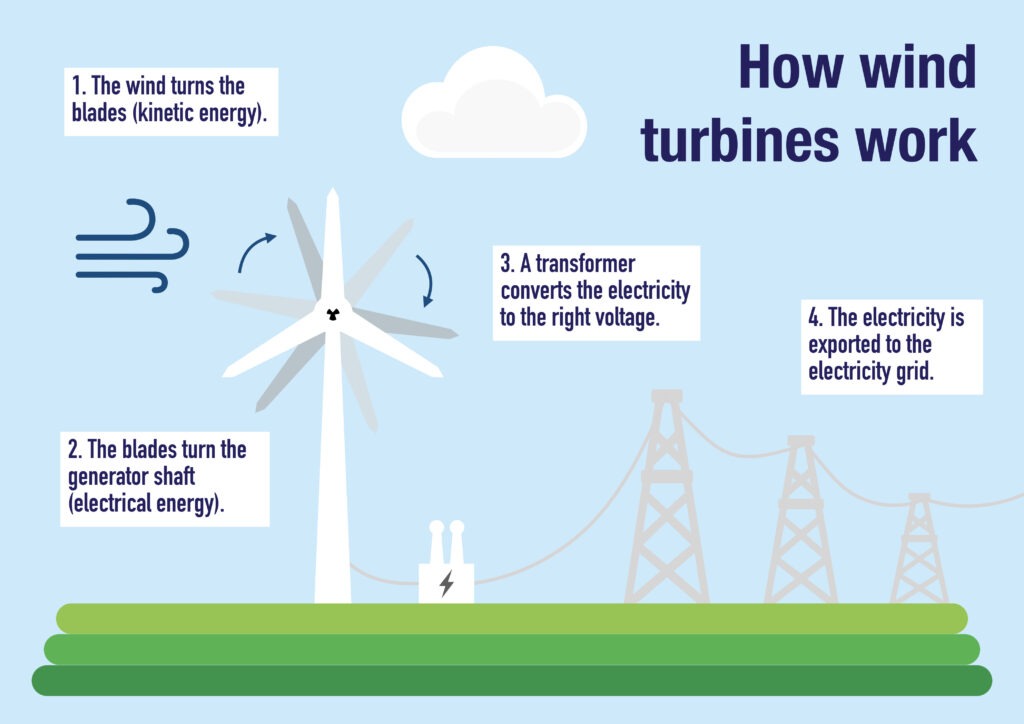
Wind Turbines: Wind energy is generated by converting the kinetic energy of wind into electricity using wind turbines. These turbines typically have large blades mounted on a tall tower; when wind moves the blades, it spins a rotor connected to a generator that produces electricity. The electricity produced is usually fed into the grid. Wind energy is a renewable resource, meaning it is naturally replenished and does not run out on a human timescale. Wind farms, which are groups of turbines, can be located on land (onshore) or at sea (offshore)33.
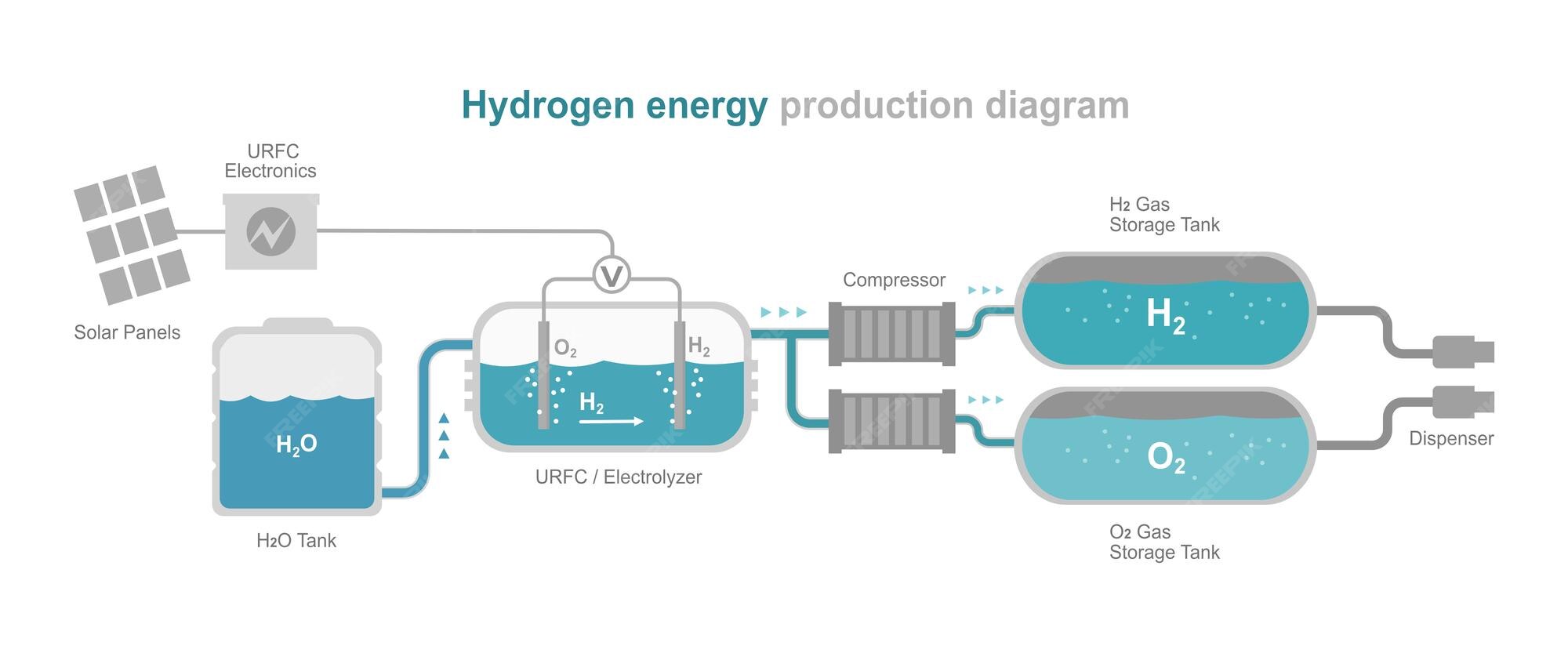
Hydrogen Energy: Hydrogen energy is produced by separating hydrogen from sources like water or natural gas. There are three main types: gray hydrogen (from fossil fuels), blue hydrogen (from fossil fuels with carbon capture), and green hydrogen (from water using renewable electricity). Hydrogen is used in industries such as steelmaking, transportation, and aviation. It can be stored, transported, and used in various forms, including ammonia and methanol. Challenges to widespread adoption include high production costs, complex infrastructure, and slow regulatory development. Significant investment is needed in production, distribution, and end-use technologies to support growth in the hydrogen energy market34.
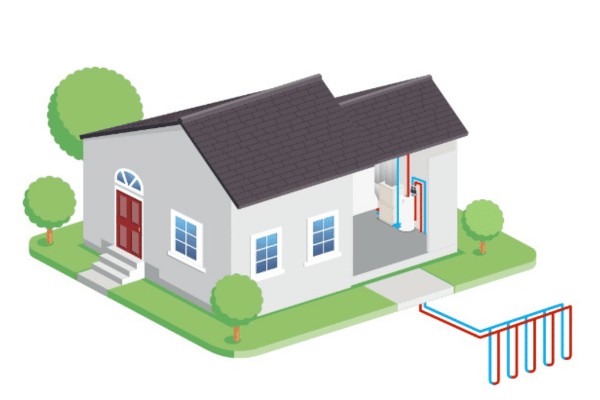
Geothermal Energy: Geothermal energy is heat energy from the earth—geo (earth) + thermal (heat)35. Geothermal, or earth‑energy systems (often GeoExchange), offer a clean and efficient way to heat and cool Canadian buildings by tapping into the stable underground temperature. According to the Canadian Centre for Energy Information, 60% of commercial and institutional energy consumption is used for space and water heating36. By replacing carbon-intensive fuel systems with geothermal systems, these buildings stand to significantly cut both their energy consumption and greenhouse gas emissions.
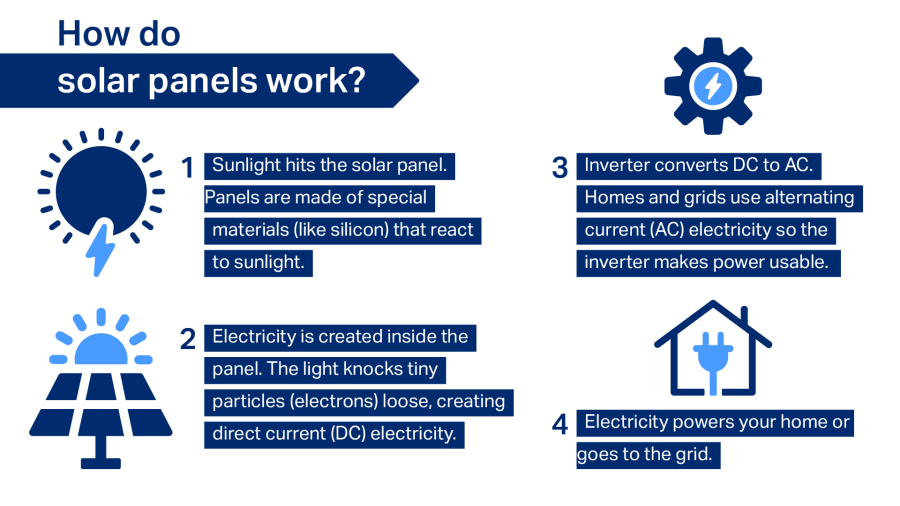
Solar Panels: Solar energy is the power derived from the Sun’s radiation, used to generate electricity and heat through technologies like photovoltaic (PV) systems and solar thermal collectors. It is a renewable resource, meaning it is naturally replenished and does not run out on a human timescale. The Sun produces energy through nuclear fusion, releasing photons that travel to Earth and can be captured by solar panels to generate electricity. Solar energy is harnessed primarily through two methods: PV systems, which convert sunlight directly into electricity, and solar thermal systems, which use sunlight to produce heat. PV panels typically convert 15–22% of sunlight into electricity, while solar thermal systems can reach up to 80% efficiency in sunny regions. Solar energy is used in residential, commercial, and large-scale applications37.
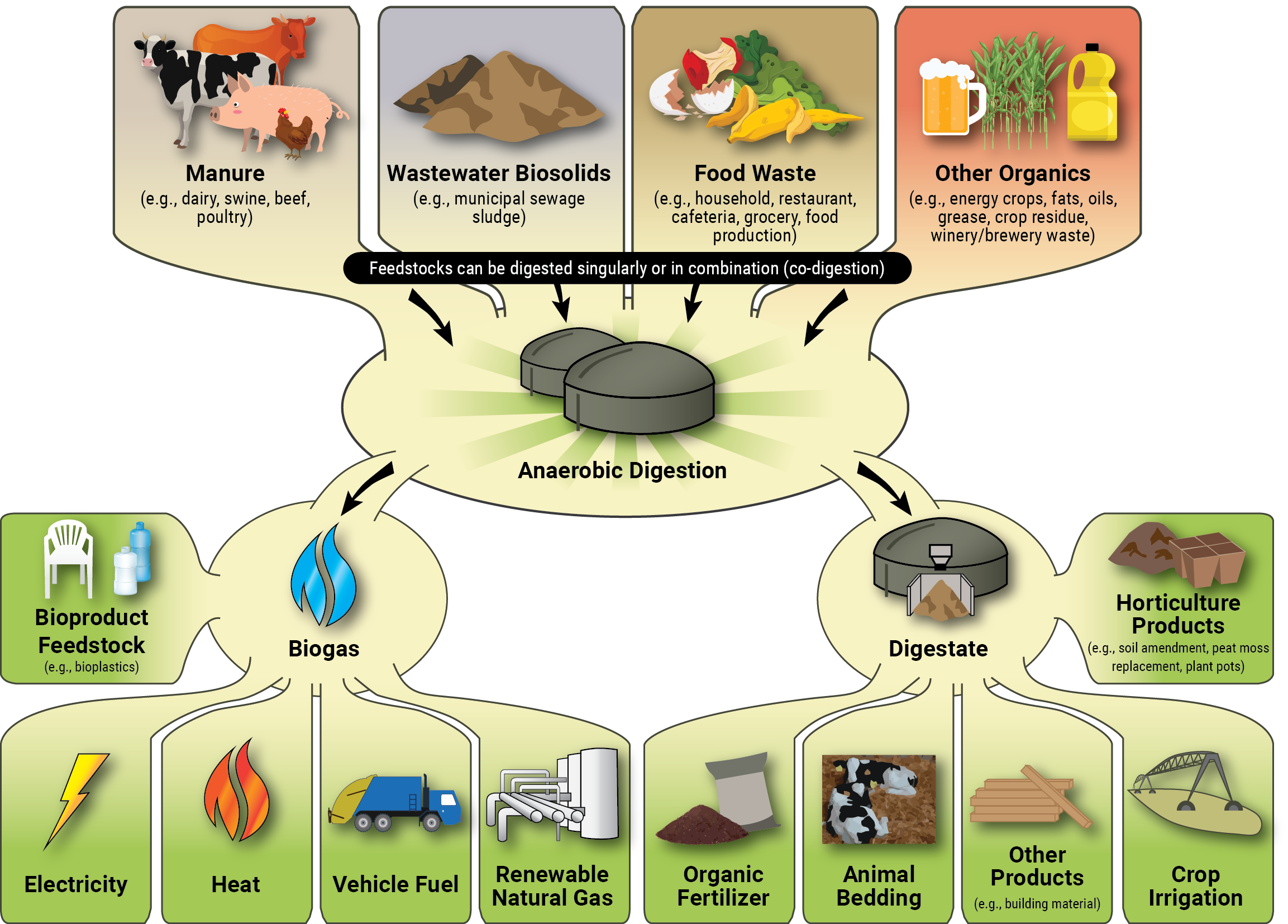
Anaerobic Digestor: Anaerobic digestion is a process where bacteria break down organic materials—like manure, food waste, and wastewater—inside a sealed tank that doesn’t contain oxygen. This process produces two main outputs: biogas, which contains methane and can be used for heating, electricity, or fuel; and digestate, a leftover material that can be used as fertilizer, animal bedding, compost, or soil amendment. Multiple types of organic waste can be combined in one system, a method called co-digestion, which helps increase biogas production. Biogas can also be purified into renewable natural gas (RNG) for use in pipelines or vehicles. Digestate is separated into solid and liquid parts, each with valuable uses and potential for cost savings or revenue38.
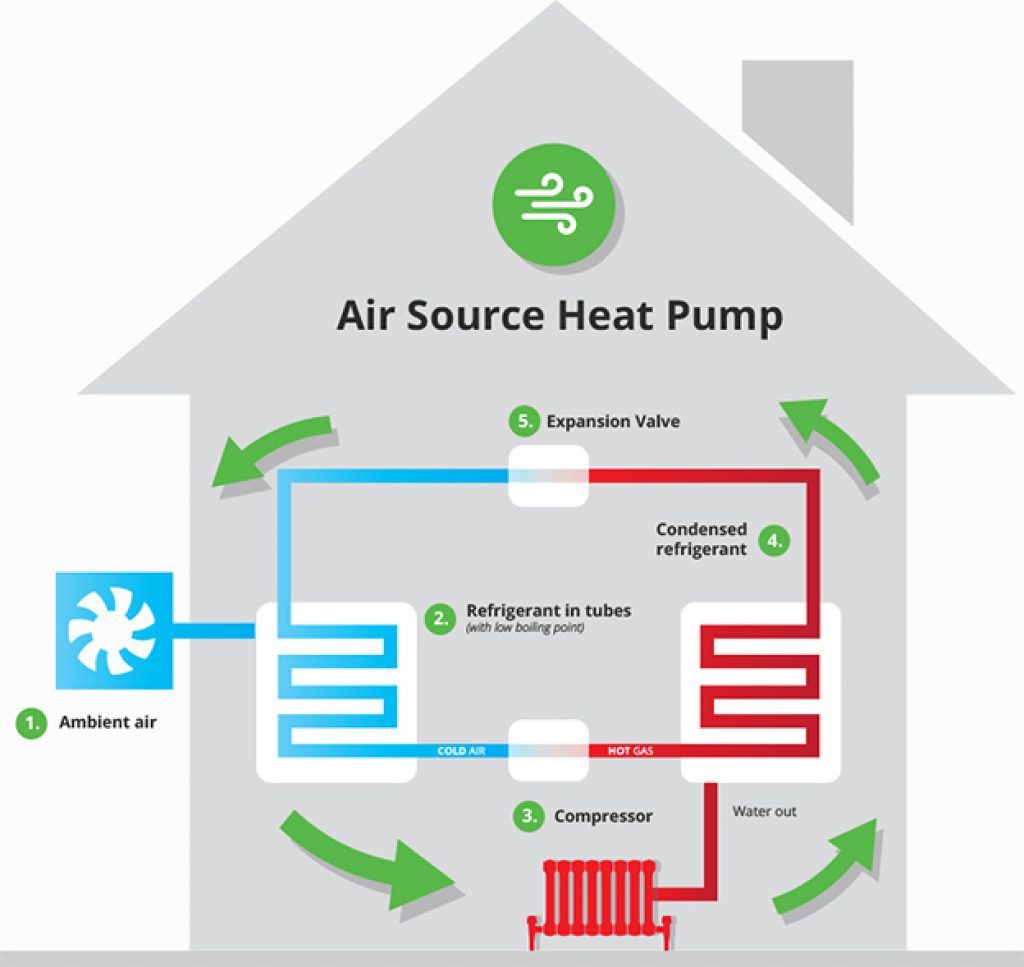
Air Source Heat Pumps: Air source heat pumps (ASHPs) are systems that provide heating and cooling by transferring heat between indoor air and the outside environment. In heating mode, they extract heat from the outdoor air—even in cold weather—and move it indoors. In cooling mode, they reverse the process to expel indoor heat. ASHPs typically have Coefficients of Performance (CoP) ranging from 2 to 4, meaning they deliver two to four times more heat than the electrical energy they consume. The CoP represents the ratio of heat output to electricity input, and cold-climate models can maintain a CoP above 2 even in sub-zero temperatures39.
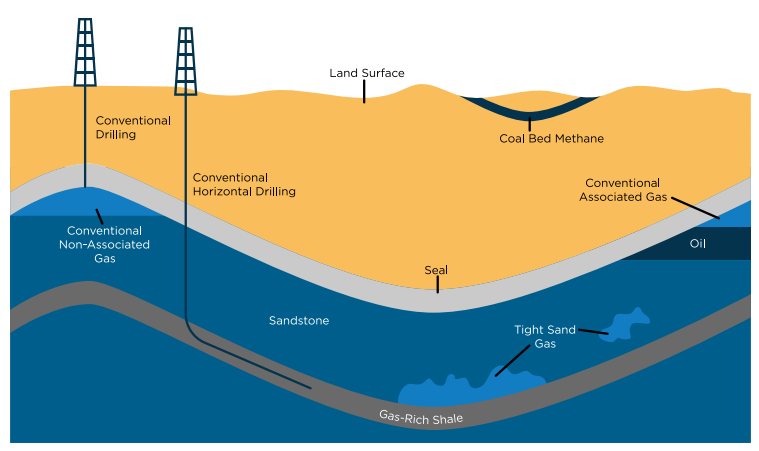
Natural Gas/Renewable Natural Gas Energy: Natural gas is a naturally occurring fuel found deep underground in rock formations. It’s mostly made of methane, along with smaller amounts of other gases like ethane and propane. To use it, companies drill wells to bring the gas to the surface, then clean and process it before sending it through pipelines or other transport systems. Renewable natural gas (RNG) is different—it’s made from organic waste like food scraps, farm waste, and landfill gases. This waste breaks down and releases methane, which is captured, cleaned, and used just like regular natural gas40.
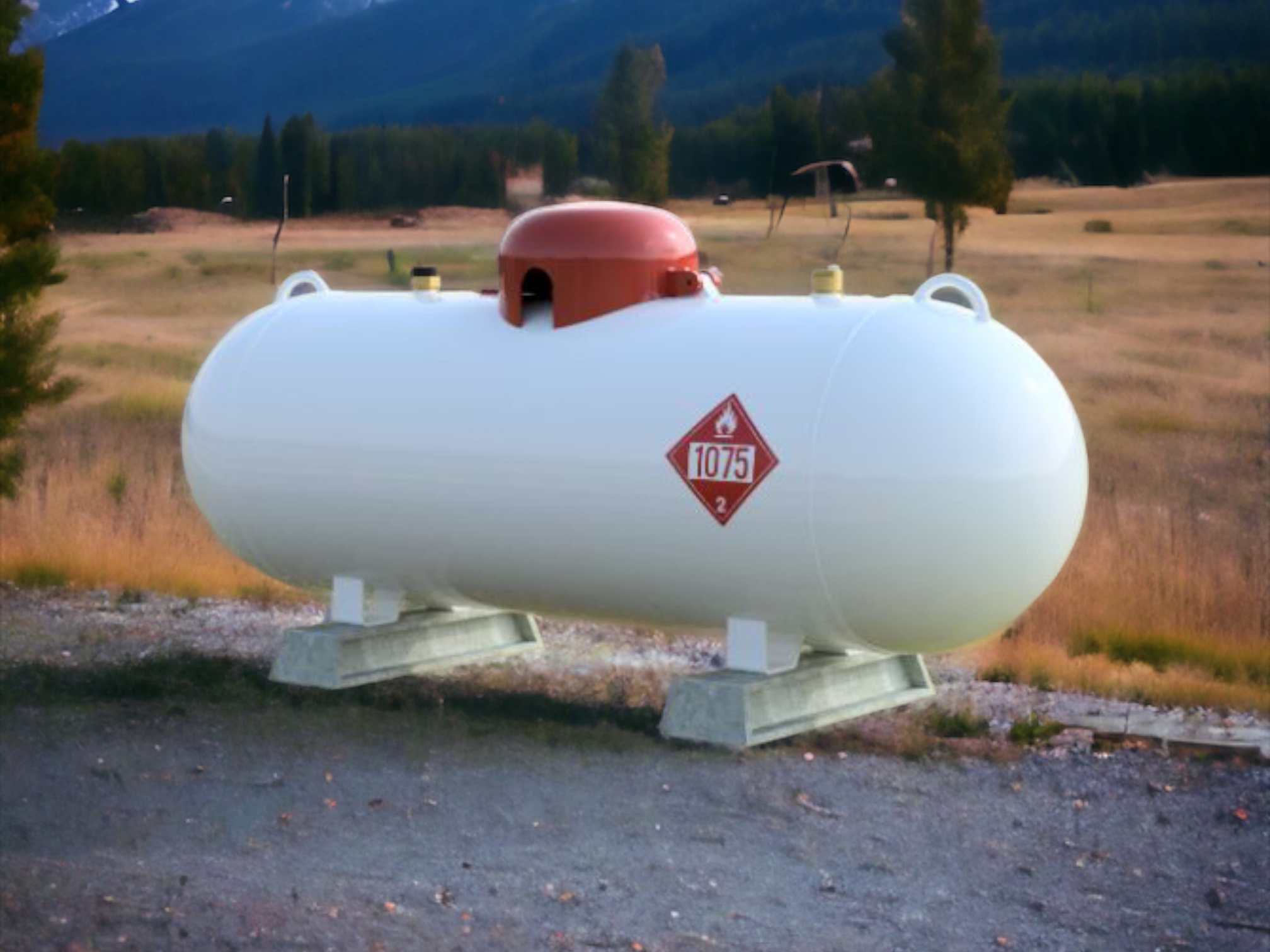
Propane/Renewable Propane Energy: Propane is a clean, efficient, and versatile energy source widely used across Canada, sometimes known as Liquefied Petroleum Gas (LPG). It’s primarily produced during natural gas processing and is stored as a liquid when compressed, making it easy to transport and use, and when released it vaporizes back into gas form. Propane powers a range of applications, including home heating, cooking, and backup generators, as well as vehicles like school buses and taxis. In agriculture, it’s used for drying grain, heating barns, and running irrigation systems, while industries rely on it for construction heating and metal processing. Renewable propane, made from organic materials, offers similar benefits but is still limited in availability within Canada41.
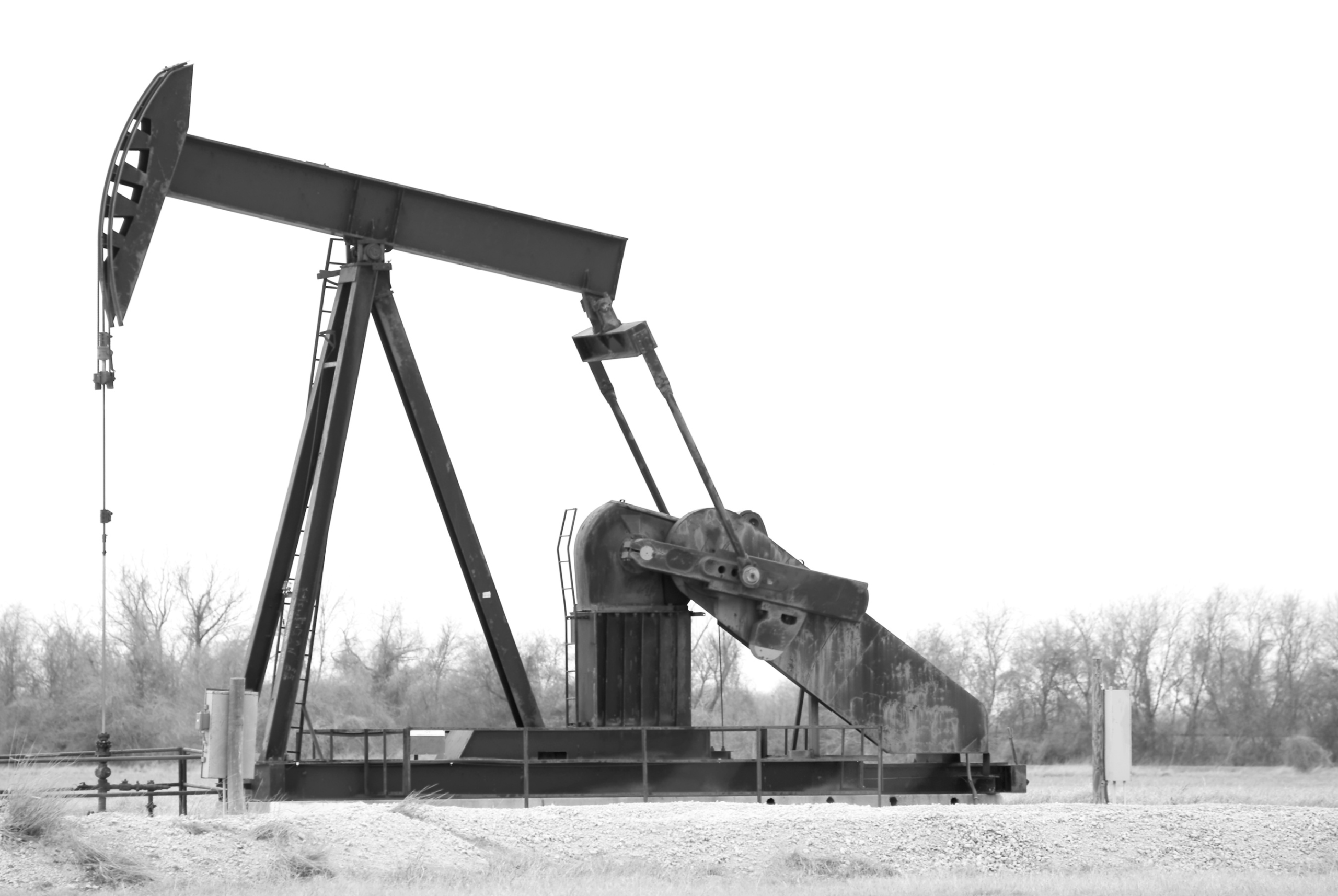
Oil (Heating/Fuel Oil), or petroleum, is an energy source used in many parts of modern life. About half of all oil produced goes into transportation fuels, including gasoline for cars, diesel for trucks, jet fuel for airplanes, and marine fuels for ships. The rest is used for heating, electricity generation, and making products such as plastics, chemicals, lubricants, and asphalt. Oil is valuable because it has a high energy density, meaning a small amount contains a lot of energy, and it can be easily transported and stored. However, burning oil products releases carbon dioxide and other pollutants42.
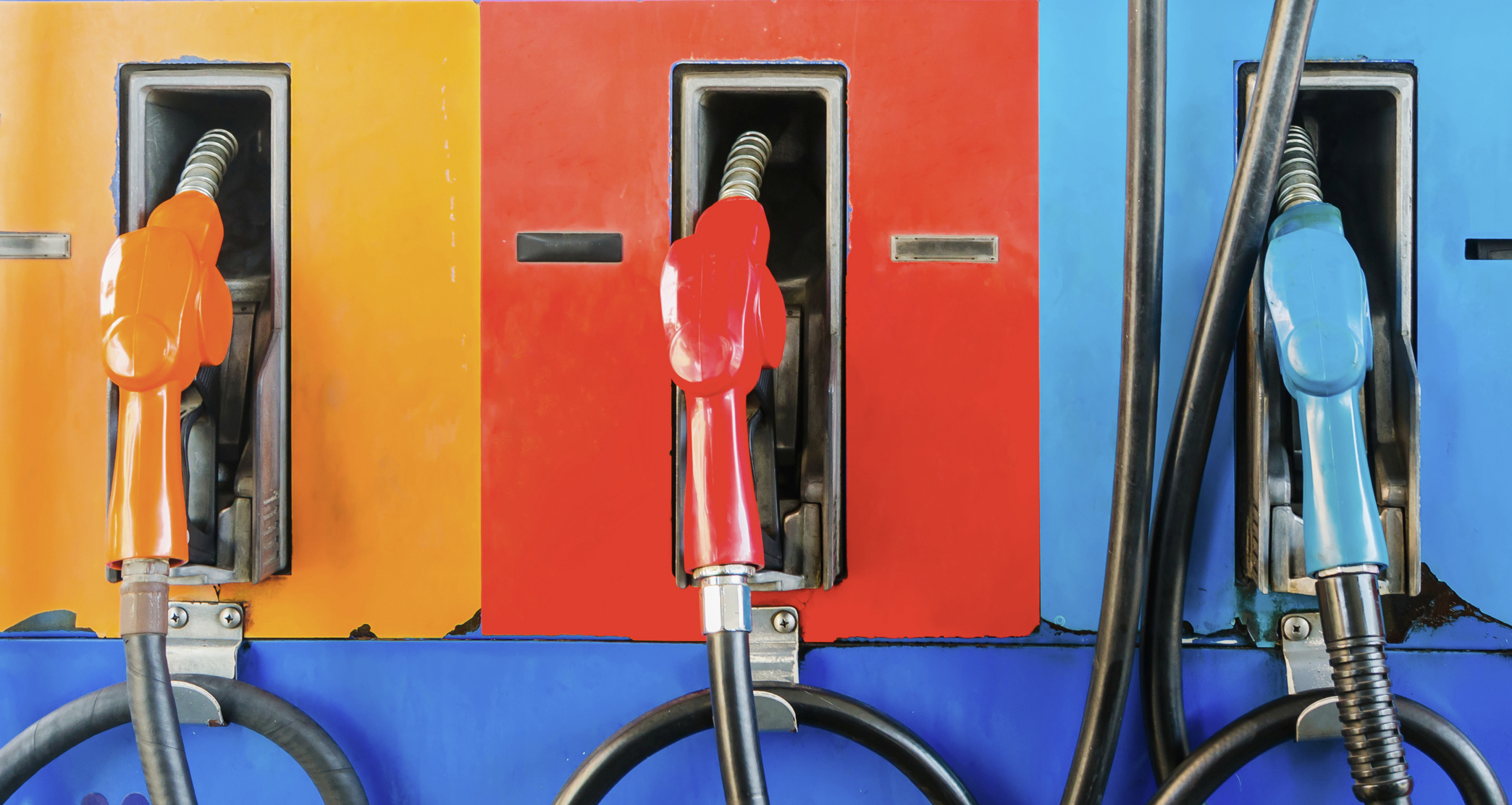
Diesel/Bio-Diesel Energy: Diesel is a powerful fuel used in vehicles, generators, and other engines. It can be made from petroleum (called petrodiesel) or from natural sources like algae (called biodiesel). Diesel engines are more efficient than gasoline engines because diesel has more energy per volume and allows for higher compression. Unlike gasoline engines, diesel engines don’t use spark plugs—they ignite fuel by compressing air until it’s hot enough. Petrodiesel is made by refining crude oil, while biodiesel is cleaner and made from renewable materials. Biodiesel is often blended with petrodiesel, with B20 (20% biodiesel) being a common mix that works well in cold weather and produces fewer emissions43.

Gasoline: Gasoline is a fuel made from crude oil that is mainly used to power cars and small trucks. At oil refineries, crude oil is processed and separated into different products, with gasoline being one of the most common. To improve performance and reduce pollution, additives like ethanol (a type of alcohol made from plants such as corn or sugarcane) are often blended into gasoline before it reaches gas stations. Gasoline is sold in different grades—regular, midgrade, and premium—which are based on octane levels that measure how well the fuel resists knocking in an engine. In addition, gasoline blends change between summer and winter to meet environmental standards and help engines run efficiently in different temperatures44.
Coal: Is a black or brownish-black rock formed from ancient plant material that was buried and transformed over millions of years through heat and pressure. It comes in different types—lignite, sub-bituminous, bituminous, and anthracite—based on carbon content and energy value. Coal has been an important source of energy for electricity and industrial use worldwide, including in Canada, but burning it releases carbon dioxide and other pollutants45.
Footnotes
- Net-zero emissions by 2050 – Canada.ca ↩︎
- Greenhouse gas emissions – Canada.ca ↩︎
- Environment and Climate Change Canada 2024–25 Departmental Plan ↩︎
- Electric Vehicle Affordability Program ↩︎
- A Made-in-Ontario Environment Plan | ontario.ca ↩︎
- A Made-in-Ontario Environment Plan | ontario.ca ↩︎
- Pathways-to-Decarbonization ↩︎
- Bruce County Official Plan (2026-2046) ↩︎
- Bruce County Environmental Sustainability Action Plan (2026-2030) ↩︎
- Bruce County Economic Development Strategic Plan (2022-2026) ↩︎
- Arran-Elderslie Corporate Strategic Plan (2022) ↩︎
- Arran-Elderslie Economic Development Strategic Plan (2026) ↩︎
- Arran-Elderslie Community Improvement Plan (2026) ↩︎
- Brockton Strategic Action Plan (2021-2025) ↩︎
- Brockton Community Improvement Plan (2026) ↩︎
- Huron-Kinloss Climate Change & Energy Plan (2020) ↩︎
- Huron-Kinloss Economic Development Action Plan (2020) ↩︎
- Huron-Kinloss Community Improvement Plan (2024) ↩︎
- Kincardine Official Plan Office Consolidation January 6 2026 ↩︎
- Kincardine Economic Development Strategy (2020-2025) ↩︎
- Kincardine Community Improvement Plan (2024) ↩︎
- Northern Bruce Peninsula Strategic Plan (2021-2025) ↩︎
- Northern Bruce Peninsula Climate Action Plan (2022-2030) ↩︎
- Northern Bruce Peninsula Community Improvement Plan (2023) ↩︎
- Saugeen Shores Official Plan Office Consolidation June 26 2026 ↩︎
- Saugeen Shores Strategic Plan (2023-2027) ↩︎
- Saugeen Shores Community Improvement Plan Policy (2024) ↩︎
- South Bruce Official Plan (2023) ↩︎
- South Bruce Community Improvement Plan (2023) ↩︎
- South Bruce Peninsula Corporate Strategic Plan (2020-2025) ↩︎
- South Bruce Peninsula Community Improvement Plan (2024) ↩︎
- Canada’s official greenhouse gas inventory – Canada.ca ↩︎
- Wind turbine: what it is, parts and working | Enel Green Power ↩︎
- What is hydrogen energy? | McKinsey ↩︎
- Geothermal Energy ↩︎
- Energy Fact Book | Canadian Centre for Energy Information ↩︎
- Turning sunlight into electricity: how does solar power work? | nzea ↩︎
- How Does Anaerobic Digestion Work? | US EPA ↩︎
- Air Source Heat Pumps | Save on Energy ↩︎
- What is Natural Gas? | Canadian Gas Association ↩︎
- Propane – Natural Resources Canada ↩︎
- Use of oil – U.S. Energy Information Administration (EIA) ↩︎
- Diesel – Energy Education ↩︎
- Gasoline explained – U.S. Energy Information Administration (EIA) ↩︎
- Coal – Energy Education ↩︎