
Redfarm Holsteins: Solar Savings, Whatever the Weather
At Redfarm Holsteins in Tiverton, energy transition isn’t just a goal; it’s part of how the farm keeps moving forward, season after season. The 150 cow dairy farm, located on Bruce Road 15, has operated since 2008, shipping milk to Gay Lea and growing its own feed. With no natural gas pipeline and electricity running 24/7 for milking, cooling, fans, and motors, summer hydro bills once topped $4,000 per month. The solution was solar, sized to fit the grid.
Built Ready, Powered Smart
A new dairy barn built in 2021 was designed with solar in mind, featuring reinforced roofing and a south facing layout. In 2024, Redfarm Holsteins partnered with Otter Energy to install a rooftop solar system. Local grid limits, however, meant only half of the planned project could move ahead. For now, the net-metering project size is set by how much generation the local grid can take, so any future expansion will depend on additional capacity.
Real Results, Any Weather
Even with those limits, the impact has been immediate. In summer, electricity bills drop close to zero, with excess generation building credits for winter. On one rainy day, the system still produced around 150 kWh in half a day, and the results were visible through a real time monitoring app. Usage shows up on the hydro bill, and generation shows up as credits.
Clean Energy That Adds Up
With an estimated 6 to 8 year payback, no on site maintenance, and no disruption to farm operations, solar has become a cornerstone of Redfarm Holsteins’ broader sustainability efforts. The farm has completed its Environmental Farm Plan, uses geothermal heating in the house, recovers heat from milk cooling, and remains open to other clean energy projects and incentive programs.
What’s Next?
Next up is simple: add more solar if the grid allows it. The farm explored battery energy storage systems, but the numbers didn’t pencil out yet. For now, Redfarm Holsteins is building momentum with the system it has, cutting costs, banking credits for winter, and showing what’s possible when a farm plans ahead and invests in clean power.
Colpoy’s Bay Women’s Institute: Heating Up a Historic Hall’s Future
When the century old Colpoy’s Bay Women’s Institute Community Hall learned its oil tank had reached end of life, the volunteers behind the Colpoy’s Bay Women’s Institute (CBWI) didn’t just replace it — they reinvented their entire approach to energy.
The small, volunteer run organization had long dreamed of moving off oil, but cost was a barrier. The turning point came with a successful Ontario Trillium Foundation capital grant and a wave of community support, including a “Fund the Furnace” chili cook off that helped close the funding gap. With momentum on their side, the team committed to a cleaner, modern HVAC system: air source heat pumps with a propane backup.
Installed just before winter, the system quickly proved its worth. Smart thermostats now let volunteers warm the building from home, eliminating early morning drives to turn up the heat. Dual zone capabilities — long forgotten in the old oil setup — now allow the hall to heat only the space in use, cutting energy waste. And for the first time in years, the hall stayed open all winter, hosting yoga, tai chi, coffee socials, concerts and rentals that help offset seasonal costs.
The benefits didn’t stop there. Summer events will be now cooler thanks to built in air conditioning. Winter humidity has dropped, eliminating the damp smell that once lingered in the old structure. And community members immediately noticed the difference: a warmer, healthier, more welcoming space.
There were learning curves — understanding how the heat pump reacts to extreme cold, fine tuning settings to minimize propane use, and adjusting heating schedules for a drafty heritage building. But with support from the Energy Transition Initiative, including expert guidance and a review of heat pump options, the team felt confident every step of the way.
For CBWI, the project wasn’t only about comfort or cost. It was about stewardship — doing what they can to support the next generation and keep a beloved community space thriving for another hundred years. And now that they’ve proved what’s possible, they’re already asking: What can we make better next? Lighting? Solar? More clean energy upgrades?
From an aging oil furnace to a future ready heat pump system, Colpoy’s Bay Women’s Institute shows how a small, determined group can spark big change — one warm, bright, community powered hall at a time.
From Bread to Batteries: Offshore Bakery’s EV Journey in Bruce County
Southampton, ON — In the heart of Bruce County, Offshore Bakery is making waves—not just with its pastries, but with its commitment to sustainability. Owner Justin Niklaus recently transitioned to an electric delivery van, marking a bold step toward cleaner operations and inspiring other local businesses to consider the switch.
Why Go Electric?
For Justin, the decision was driven by practicality. Daily deliveries to Kincardine and Sauble Beach were racking up fuel costs. “We were spending hundreds on gas for small orders,” he explains. The switch to an electric van promised relief from rising fuel bills and aligned with his long-standing desire to reduce environmental impact.
Navigating the Transition
Like any big change, the transition came with a few learning curves. The EV van, a demo model, experienced a software glitch in its first months, something quite different from the mechanical fixes Justin was used to. “It was like rebooting a phone,” he says. “A quick update solved it, though it did take some patience.”
Charging infrastructure also required some planning. Fast chargers are limited in Bruce County, and the van’s size means certain parking spots are off-limits. Justin relies on a drip charger (Level 1 charger) at the bakery and maps out routes to make sure charging stays seamless.
Financial Considerations and Support
The initial investment—over $110,000—was significant. Fortunately, Mercedes-Benz Canada provided trade-in support and helped navigate the paperwork for available incentives. Justin acknowledges that EVs may not suit every business model. “If you’re hauling rocks, stick with your flatbed,” he jokes. “But for bakeries or light delivery businesses, it’s a practical choice.”
Environmental Impact and Future Plans
Justin’s motivation wasn’t just financial. “When you’re stuck in GTA traffic, seeing all that combustion—it’s obvious it affects the environment,” he says. Offshore Bakery values knowing that their EV is powered by clean electricity from the local grid.
Looking ahead, Justin is exploring high-efficiency electric ovens and even considering solar—especially with government programs offering up to 75% off capital costs.
Advice for Other Bruce County Businesses
Justin encourages other local businesses to explore cleaner energy solutions, while acknowledging that they can take planning and upfront investment. “It’s a commitment, but the payoff comes in the long run,” he says. Lower energy bills, cleaner operations, and potential government support make the journey worthwhile.
Community Response
Most customers haven’t noticed the switch, which Justin sees as a positive sign. “At the end of the day, people just want the bread to show up on time,” he laughs. With this story now public, Offshore Bakery’s quiet sustainability efforts are sure to inspire fresh ideas across the community.
Plugged In and Paying Off: EV Charging at the Quality Inn
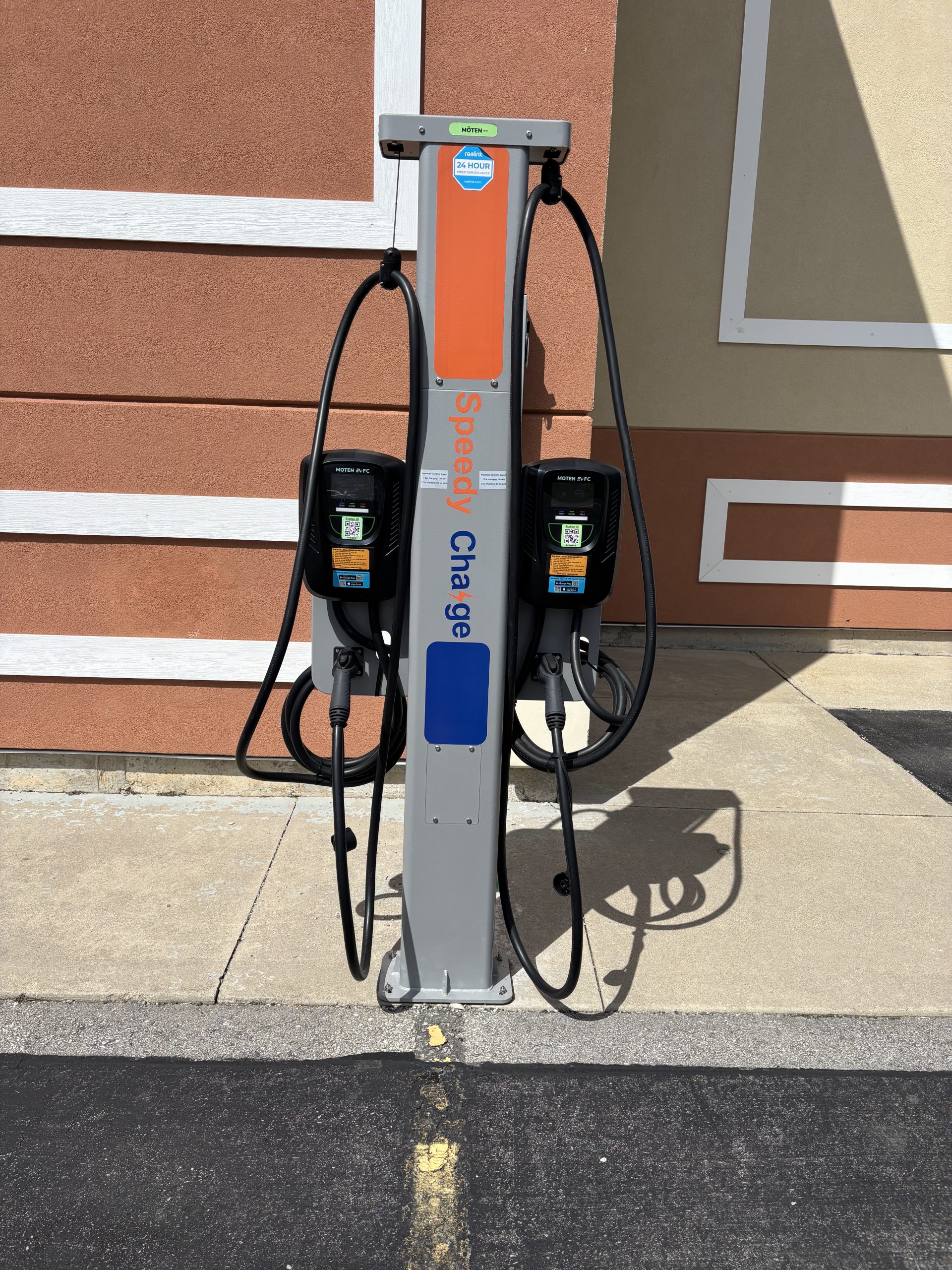
At the Quality Inn in Southampton, electric vehicle charging has become a practical amenity that reflects changing guest expectations and the hotel’s efficient approach to energy use.
The decision to install EV charging was driven by sustainability requirements and increasing guest demand. More travelers were arriving in electric vehicles and asking if charging was available on site—often before booking.
“As an EV driver myself, I understood how valuable overnight charging can be,” the owner says.
Making Use of What Was Already There
During planning, the hotel reviewed its existing electrical service. While EV charging was never part of the original design, the review showed sufficient capacity to support up to 10 charging ports, without upgrading the main electrical service.
That meant the project could move forward by distributing existing power to the parking area, helping keep costs manageable.
Costs and Incentives
The hotel installed four Level 2 EV charging ports suitable for overnight charging. Total project costs were just under $50,000, with most expenses tied to electrical and site work.
Regional incentives provided $5,000 per port, for a total of $20,000, allowing the project to expand from two ports to four.
Part of a Broader Efficiency Focus
EV charging fits naturally into the hotel’s overall sustainability approach. The property uses LED lighting throughout and high efficiency heat pumps, with individual thermostats in every guest room to reduce unnecessary energy use.
As a result, electricity costs are significantly lower than many comparable hotels—often less than a quarter of what similar properties pay, even with EV charging in operation.
Today, EV charging supports bookings, generates revenue, and enhances guest convenience—without complicating operations.